The Mediterranean Sea
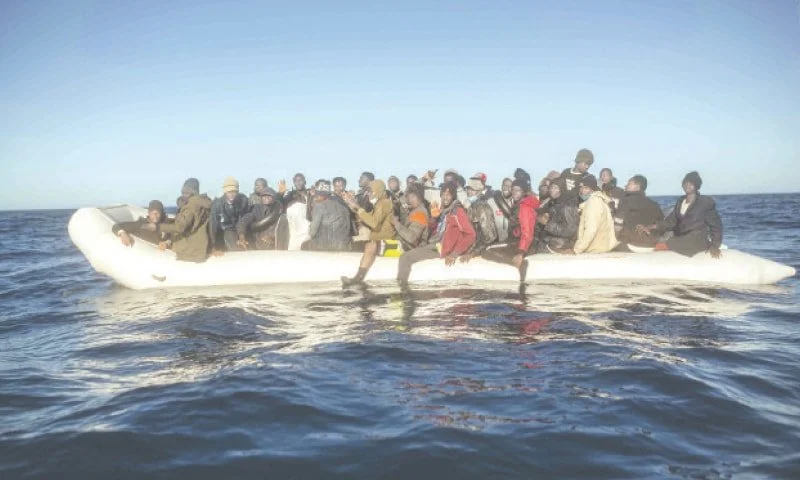
From the eye of an immigrant
The Mediterranean Sea does not look dangerous.
That is its first lie.
From the shore, it stretches calm and blue, almost polite. No towering waves. No roaring storms. Just a flat surface reflecting the sky like a mirror that refuses to confess what it has seen.
People imagine chaos when they think of the crossing — screaming, thrashing water, dramatic rescues. That image comforts the distance between them and it. It makes the sea look violent, unpredictable, responsible.
But the Mediterranean is rarely dramatic.
It kills quietly.
The Calm Before the Crossing
By the time someone reaches the sea, most of the fear has already been spent.
The desert takes urgency.
The prisons take dignity.
The waiting camps take hope and compress it into something smaller — something more stubborn.
In the book, the night of departure begins not with panic, but with routine. Equipment carried downhill. Boats inflated under the watch of men with rifles. Names replaced by numbers. Women and children moved first. The rest wait, watching Europe float away in the distance, packed into someone else’s boat.
When the second boat fails, no one argues.
You learn early that argument costs energy, and energy is survival.
The sea waits while people drink Fanta water — rainwater collected in cracked concrete pools, stained orange by rust and desert sand. It tastes like salt and metal. Still, it is swallowed without complaint.
By the time engines cough to life, the body has already accepted the rules.
This is not bravery.
This is exhaustion repurposed as courage.
Silence on the Water
Once the boat leaves the shore, voices disappear.
Not because people are calm — but because silence weighs less than panic. Panic has consequences. Panic tips boats. Panic invites violence from guards who are still close enough to hear you.
Out on the water, silence becomes policy.
In the book, when the engine stops, nobody screams. Nobody prays out loud. The sea is quiet, and quiet feels safer than noise. Someone laughs too loudly — the kind of laugh that sounds like crying — but even that fades quickly.
The Mediterranean does not need waves to terrify you.
It terrifies you with stillness.
The water does not look deep.
It looks endless.
That difference matters.
Arrest Disguised as Rescue
The most dangerous moment at sea is not the storm.
It is the light.
A flash on the horizon. White. Blue. White again. For a second, hope rises — the kind of hope that feels like relief. Some people smile. Some cry. Someone whispers “rescue.”
Then the sound arrives.
Engines.
Shouting.
Guns reflecting light.
In the book, Biggy names it correctly:
“It wasn’t rescue. It was arrest.”
This is the Mediterranean’s second lie — the idea that visibility equals safety. That being seen guarantees help. That law operates the same on water as it does on land.
People are transferred like cargo. Boats are deflated with knives, the air escaping like a dream being punctured. The sea watches without response.
Below deck, underground cells wait. Ransom replaces rescue. Phones are handed to trembling hands. Mothers answer calls they will never forget.
The sea does not drown everyone.
Sometimes, it delivers them somewhere worse.
The Weight of Water
What makes the Mediterranean terrifying is not violence.
It is scale.
The water does not rush you. It does not chase you. It simply exists in quantities too large for the human body to argue with. There are no landmarks. No shadows. No direction that feels convincing.
When people fall into it, they disappear quickly — not because the sea is hungry, but because it is vast. A body becomes small in seconds. Arms wave. Then they don’t.
In the book, the realization comes quietly:
the sea is not a monster.
It is a mirror.
It reflects fear without judgment. It shows you exactly how fragile you are, without commenting on whether you deserve to be saved.
This is why the crossing breaks people who survive it.
Because the sea does not fight you.
It ignores you.
Arrival Is Not Resolution
When land finally appears, it does not feel like victory.
It feels unreal.
Silver blankets. Shaking hands. The smell of fuel and salt clinging to skin. People sit wrapped in foil, staring at nothing, unsure whether they are allowed to breathe yet.
Lampedusa is not an ending.
It is a pause.
The cameras arrive. The language changes. Survivors become migrants. Individuals become flows. The story is simplified to a moment that photographs well.
But the sea does not end when feet touch land.
It follows people into sleep.
Into silence.
Into their inability to explain what happened without losing something in the telling.
This is the Mediterranean’s final lie — that arrival equals safety, that survival equals closure.
It does not.
It only means the rules have changed.
What the Sea Takes
The desert takes bodies quietly.
The sea takes certainty.
After the crossing, nothing feels solid. Not land. Not time. Not identity. People survive, but they do not return unchanged. Something remains on the water — not a person, but a version of them that trusted stability.
The Mediterranean does not ask for belief.
It asks for surrender.
And that is why it must be written about carefully.
Not as spectacle.
Not as tragedy porn.
Not as a metaphor.
But as what it is:
A calm surface that has learned how to erase without noise.
Why This Must Be Remembered
People argue about borders as if water were neutral.
It is not.
Water is political when people are pushed into it. Silence is political when screams go unanswered. Distance is political when it allows forgetting.
The Mediterranean has become the most normalized mass grave in the world — precisely because it looks so peaceful.
And peace, when misunderstood, is dangerous.
This is not written to accuse.
It is written to record.
Because the sea remembers everything.
Even when we pretend it doesn’t.